
Capsaicin: From Spicy Flavor to Medical Benefits
October 01, 2026
Getting to Know Quercetin: Sources, Biological Activities, and Its Potential
September 24, 2026

Eugenol: Aromatic Compound from Clove Oil and Its Various Benefits
September 17, 2026
Aloin: Active Compound in Aloe vera and Its Potential Benefits
September 10, 2026
Introducing Xanthorrhizol: The Main Active Ingredient from Temulawak
September 3, 2026

Andrographolide: Provider of Various Benefits Behind the Bitter Taste
August 27, 2026

Asiaticoside: The Compound Behind One of the Miracle Elixir of Life Plants
August 20, 2026
Apigenin and Its Role in Health
August 13, 2026
Delving into the Potential of Alpha-Mangostin from Mangosteen Skin
August 8, 2026

Caffeine: Chemical Structure, Natural Sources, and Side Effects to Know
August 1, 2026
Tamanu Polyphenol: Harnessing the Power of Nature Through Liposome Multiplier Delivery Technology
July 30, 2026

Understanding Catechins: From Natural Antioxidants to Marker Compounds in Quality Control
July 25, 2026

Unlocking Natural Skin Regenerator of Tamanu Polyphenol
July 23, 2026

A BRIEF ABOUT PHYLLANTHIN, AN IMPORTANT COMPOUND OF THE MENIRAN PLANT
July 18, 2026
The Meniran plant (Phyllanthus niruri) is traditionally used as a herbal solution for various complaints, including kidney stones, stomach acid, cough, and infections. This has led to numerous studies exploring the various benefits of this plant to be utilized more effectively and efficiently. In every research and product development using the Meniran plant, a reference compound is needed in the standardization process to ensure the quality and consistency of the Meniran plant material used, commonly referred to as a marker compound. The marker compound used for the standardization of the Meniran plant is Phyllanthin.

THE SYNERGY EFFECT: WHY TAMANU POLYPHENOL OUTPERFORMS VIRGIN OIL
July 16, 2026
For centuries, the golden-green oil pressed from the nuts of Calophyllum inophyllum, known throughout Polynesia as tamanu oil, has been prized as a traditional remedy for wounds, burns, scars, and diverse skin conditions. Today, modern analytical chemistry has not only validated these ancestral uses but has revealed something far more remarkable: the oil's healing power does not reside uniformly throughout the liquid. Rather, it is concentrated in a specific fraction—the polyphenol-rich resin—that, when isolated, demonstrates efficacy 4 to 5 times greater than that of the whole virgin oil. This article explores the scientific foundation of this "synergy effect," examining why tamanu polyphenol represents a paradigm shift in natural skin care and therapeutic application.
TAMANU POLYPHENOL: INDONESIA'S STANDARDIZED BREAKTHROUGH IN NATURAL SKINCARE INNOVATION
July 09, 2026
The journey of Calophyllum inophyllum, from a traditional healing oil revered in Polynesian and Indonesian cultures to a scientifically validated cosmetic ingredient, has taken a significant leap forward with the development of Tamanu Polyphenol. While calophyllolide represents one specific neoflavonoid with targeted bioactivities, Tamanu Polyphenol encompasses a broader spectrum of bioactive compounds that together deliver superior skin health benefits. This article explores the scientific foundation, development, and commercial potential of Tamanu Polyphenol as an Indonesian innovation in natural skincare.
CALOPHYLLOLIDE: FROM INDONESIA'S BIODIVERSITY TREASURE TO HIGH-POTENTIAL COSMETIC INGREDIENT
July 02, 2026
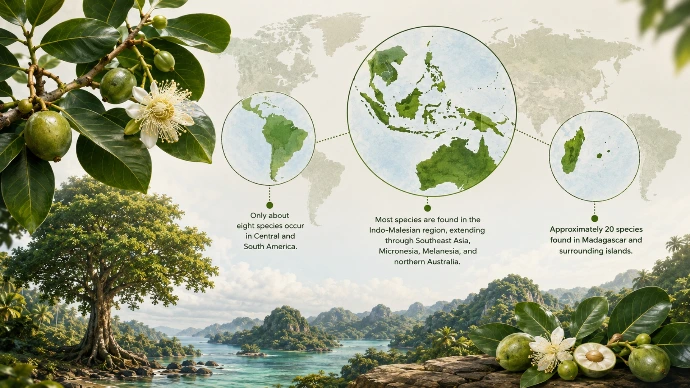
The genus Calophyllum (family Calophyllaceae, formerly Clusiaceae) comprises approximately 190–200 species of evergreen trees distributed across the tropics. The name derives from Greek kalos ("beautiful") and phyllon ("leaf"), reflecting the aesthetic appeal of these trees. Most species are found in the Indo-Malesian region, extending through Southeast Asia, Micronesia, Melanesia, and northern Australia. Only about eight species occur in Central and South America, with approximately 20 found in Madagascar and surrounding islands.

ECODING GLOBAL REGULATORY REQUIREMENTS FOR MITRAGYNINE MARKET ENTRY
June 26, 2026
Sourcing a high-purity mitragynine extract is only half the challenge. The more difficult and often more expensive step is navigating the regulatory framework that governs how kratom-derived ingredients can be marketed, imported, distributed, and sold across global jurisdictions.

PROTECTING PURITY AFTER THE PLANT: STORAGE, PACKAGING, AND COLD-CHAIN PROTOCOLS FOR HIGH-PURITY MITRAGYNINE
June 25, 2026
Producing a high-purity mitragynine extract requires sophisticated cultivation, harvesting, extraction, and purification controls. Yet many manufacturers overlook a critical reality: the degradation mechanisms that threaten mitragynine during extraction do not disappear once the extract leaves the production facility.

SCALING FOR SUCCESS: MAINTAINING QUALITY DURING HIGH-VOLUME PRODUCTION SHIFTS
June 10, 2026
The transition from a boutique botanical brand to a mass-market competitor is the moment where most quality systems break. The alchemy that produced a perfect 10kg batch of alkaloid-rich extract is notoriously difficult to replicate at 1,000kg. As we conclude this series on strategic scaling, we focus on the final frontier for buyers: moving from small-batch precision to industrial-scale reliability without losing the product’s therapeutic or chemical integrity.
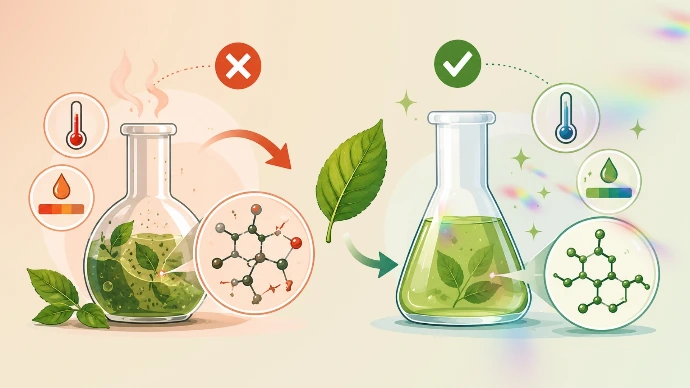
PRECISION EXTRACTION: METHODS THAT PREVENT ALKALOID DEGRADATION AND ISOMERIZATION
June 03, 2026
For B2B buyers and product formulators, understanding the
extraction process is just as vital as reading the final Certificate of
Analysis (COA). Here is how precision extraction technologies prevent alkaloid
degradation and isomerization, ensuring the purity of your final product.
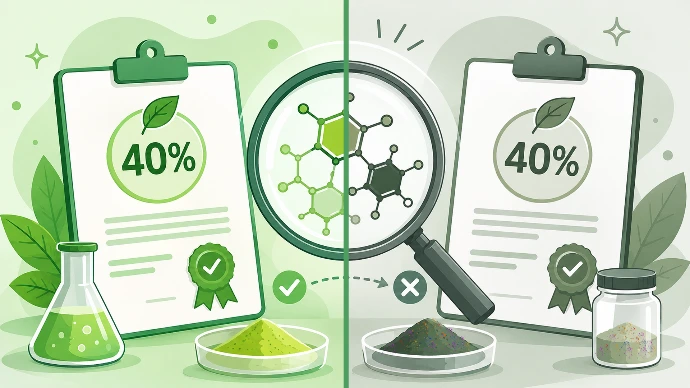
THE HIDDEN COST OF “DIRTY” EXTRACT: WHY DIASTEREOMERS RUIN BATCH CONSISTENCY
May 27, 2026
Two extracts can both proudly declare “40% Mitragynine” on their Certificates of Analysis (COA). On paper, they appear identical. But in the manufacturing suite, one formulation succeeds while the other fails or worse, must be scrapped entirely. The culprit is rarely total alkaloid content; it is the unmeasured, invisible alkaloid “noise” caused by diastereomers like speciogynine, paynantheine and speciociliatine. For procurement managers and brand owners, understanding this hidden variable is the difference between supply chain reliability and chronic batch rejection.
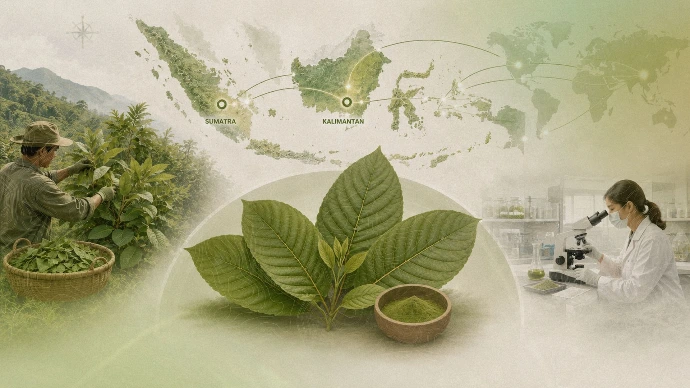
THE INDONESIA ADVANTAGE: STRATEGIC SOURCING FOR GEOGRAPHIC PURITY
May 20. 2026
Indonesia has established itself as the world’s primary source of kratom (Mitragyna speciosa), with the islands of Sumatra and Kalimantan forming the backbone of the global supply chain. However, for international buyers seeking consistent, high-purity extracts, geographic origin is only the starting point. True quality assurance demands a deeper understanding of plant physiology, supply chain architecture, and seasonal dynamics. This article outlines the key pillars of strategic sourcing for geographic purity and why Indonesian leaf, when sourced with scientific rigor, offers a distinct competitive advantage.

WHAT DEFINES “HIGH-PURITY” MITRAGYNINE EXTRACT?
May 13, 2026
The term ‘high-purity’ has become a critical benchmark for quality assurance. For those managing supply chains, ‘high-purity’ must be treated as a measurable scientific metric rather than just a marketing claim. In the current market, this necessitates a strategic alignment with the application: utilizing standard extracts (20-45%) for entry-level wellness goods, high-potency extracts (50-80%) for premium consumer formulations, or ultra-high purity isolates (>90%) for pharmaceutical-grade research.
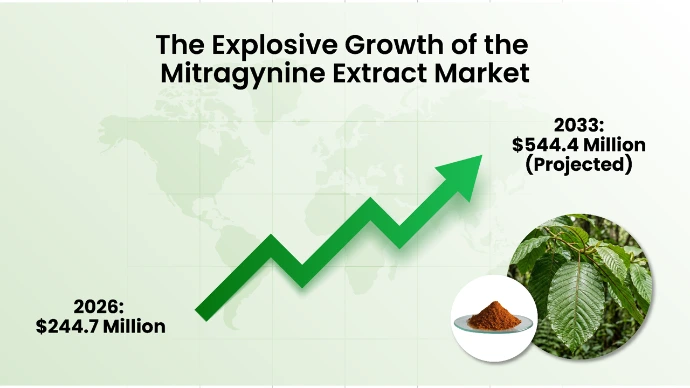
HOW TO SOURCE HIGH-PURITY MITRAGYNINE EXTRACT: A BUYER'S GUIDE
May 06, 2026
The global mitragynine extract market is currently operating at a massive scale, with valuations estimated at USD 244.7 million in 2026 and a projected climb to USD 544.4 million by 2033, driven by 12.1% CAGR. With retail sales climbing 21.9% to reach 441.4 million, marking the definitive shift of the category from “niche botanical” to legitimized “wellness ingredient.”
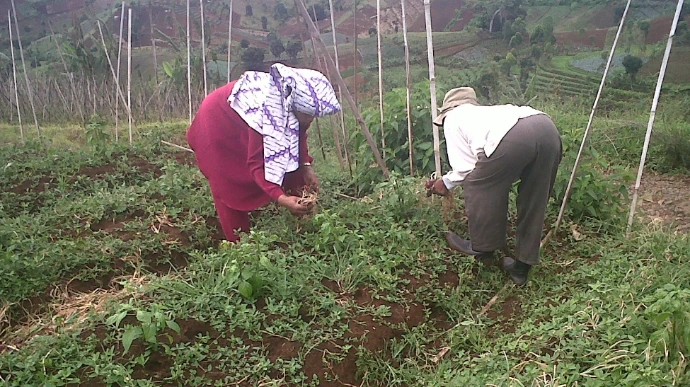
DEVELOPING JAMU (TRADITIONAL INDONESIAN MEDICINE); LEARNING FROM OTHER COUNTRIES
Indonesia adalah negara kedua terbesar di dunia yang mempunyai keanekaragaan hayati ( biodiversity ) setelah Brazil dengan Amazonnya.

JAMU: INDONESIA TRADITIONAL HERBAL MEDICINE TOWARDS RATIONAL PHYTOPHARMACOLOGICAL USE
Jamu is the Indonesian traditional herbal medicine that has been practised for many centuries in the Indonesian community to maintain good health and to treat diseases.

BAJAKAH AND CANCER MEDICINE
Selamat untuk Yazid, Anggina Rafitri, dan Aysa Aurealya Maharani murid SMAN Palangkaraya dan guru pembimbing siswa, Helita, atas gelar juara pada Youth National Science Fair 2019 (YNSF) di Universitas Pendidikan Indonesia (UPI), Bandung.
Prestasi ini berlanjut dengan perolehan medali emas,